Mar . 21, 2026 03:25
Choosing the Right Soccer Ball Set Size 5: A Comprehensive Guide
Selecting the ideal soccer ball set size 5 is crucial for enhancing performance and enjoyment, whether you're a seasoned player or just starting out. This guide will explore the key factors to consider, from materials and construction to regulations and recommendations, helping you make an informed decision. A quality size 5 soccer ball is the standard for official matches and training sessions for players aged 12 and up. We'll delve into what makes a good soccer ball and how to choose the best one for your needs.
Understanding Soccer Ball Set Size 5 Regulations
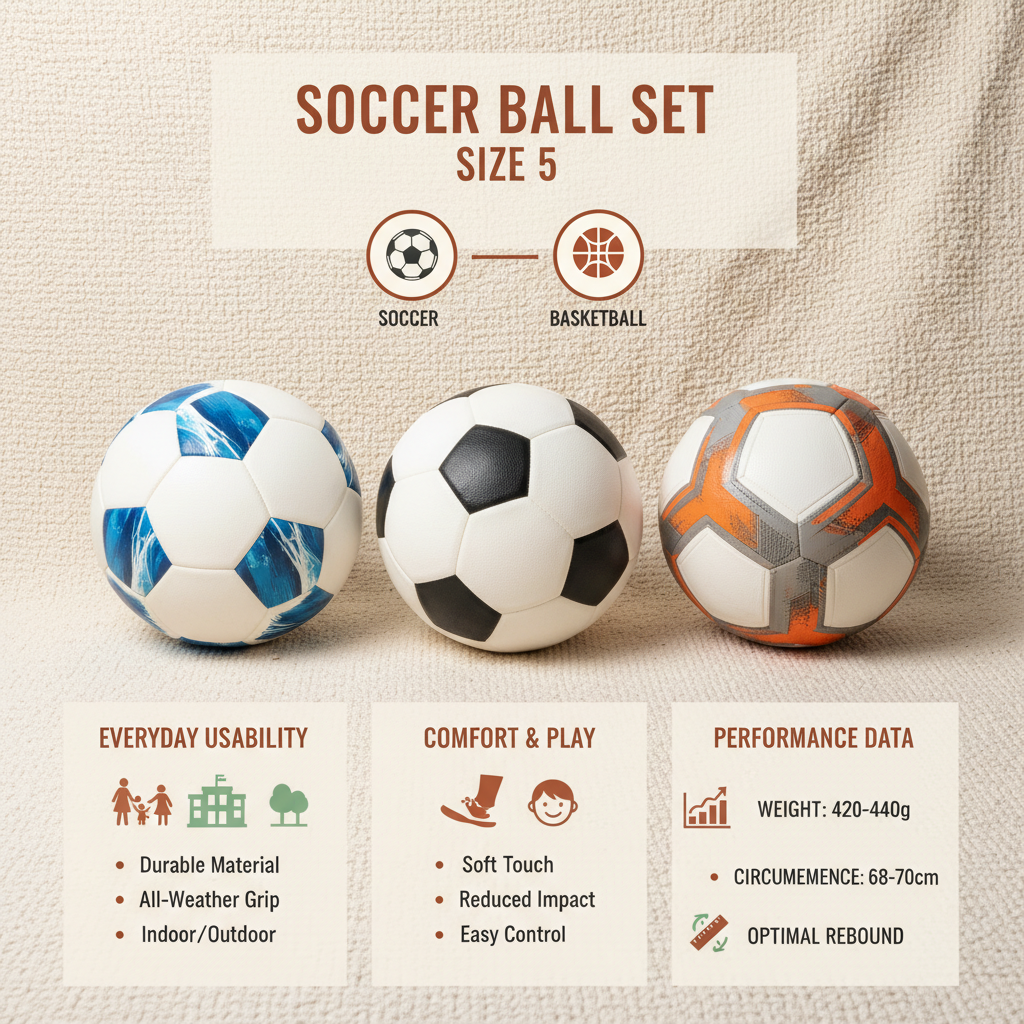
Official soccer regulations, as outlined by FIFA, specify the size and weight requirements for a size 5 soccer ball. The circumference must be between 68 and 70 cm (27-28 inches), and the weight must be between 410 and 450 grams (14-16 ounces). These standards ensure fair play and consistency across all levels of competition. Using a ball that doesn't meet these specifications can impact gameplay and potentially lead to disqualification in official matches. It's essential to verify that any soccer ball set you purchase complies with these regulations.
Key Takeaway: Adhering to FIFA's size and weight guidelines is essential for official play and ensures consistent performance.
Materials Used in Soccer Ball Set Size 5 Construction
The materials used in a soccer ball significantly influence its performance, durability, and feel. Common materials include polyurethane (PU), polyvinyl chloride (PVC), and rubber. PU balls are known for their soft touch, excellent water resistance, and overall high quality. PVC balls are more affordable but generally less durable and have a harder feel. Rubber balls are typically used for recreational play and training. The bladder, which holds the air, is often made of latex or butyl. Butyl bladders retain air better than latex, reducing the need for frequent inflation. Choosing the right material depends on your budget, playing conditions, and desired level of performance.
Material Comparison:
• PU: Soft touch, excellent water resistance, high quality
• PVC: Affordable, less durable, harder feel
• Rubber: Recreational play, training
Comparing Different Types of Soccer Balls
Different types of soccer balls are designed for specific purposes. Match balls are the highest quality, used in professional games and often feature thermally bonded seams for a seamless surface and superior water resistance. Training balls are more durable and designed to withstand frequent use, often at a lower price point. Futsal balls are smaller and heavier, designed for indoor play on hard surfaces. Recreational balls are the most affordable option, suitable for casual play and practice. Understanding the differences between these types will help you select the best ball for your needs.
Finding the Perfect Soccer Ball Set Size 5 at Starry Balls China
At Starry Balls China, we offer a comprehensive selection of soccer ball set size 5 options to suit every player and budget. We pride ourselves on providing high-quality balls that meet FIFA standards and deliver exceptional performance. Our range includes match balls, training balls, and recreational balls, all crafted with durable materials and attention to detail. We are committed to offering competitive pricing and excellent customer service. Explore our collection today and find the perfect soccer ball to elevate your game!
Conclusion
Choosing the right soccer ball set size 5 is essential for enjoying the beautiful game. By considering factors such as material, construction, and intended use, you can find a ball that enhances your performance and provides long-lasting enjoyment. Starry Balls China offers a wide range of high-quality soccer balls to meet your needs.
Frequently Asked Questions (FAQs)
What PSI (pounds per square inch) should a size 5 soccer ball be inflated to?
The recommended PSI for a size 5 soccer ball is between 8.5 and 15.6 PSI (580-1080 mbar). However, it's essential to check the specific recommendations printed on the ball itself, as manufacturers may slightly vary this range. Using a proper soccer ball pump with a pressure gauge is crucial for accurate inflation. Over-inflating can make the ball too hard and potentially dangerous, while under-inflating can affect its performance.
How often should I inflate my soccer ball?
The frequency of inflation depends on the type of bladder and how often the ball is used. Latex bladders lose air more quickly and may require inflation before each use. Butyl bladders retain air much longer and may only need inflation every few weeks. Regularly checking the pressure and topping it off as needed will ensure optimal performance. You'll also notice a decrease in pressure during temperature changes, so it’s good practice to check during seasonal shifts.
What's the difference between a thermally bonded and a stitched soccer ball?
Thermally bonded soccer balls are created by fusing the panels together using heat and adhesive, resulting in a seamless surface. This makes them more water-resistant, durable, and offers a more consistent touch. Stitched soccer balls are constructed by sewing the panels together. While more affordable, stitched balls tend to absorb more water and may have slightly less consistent performance over time. Thermally bonded balls are generally preferred for professional matches.
Where can I find a quality soccer ball set size 5?
You can find a wide selection of high-quality soccer ball set size 5 options at Starry Balls China. We offer competitive pricing, reliable shipping, and excellent customer support. We are dedicated to providing top-notch products that meet the needs of players of all levels.