Oct . 21, 2026 15:48
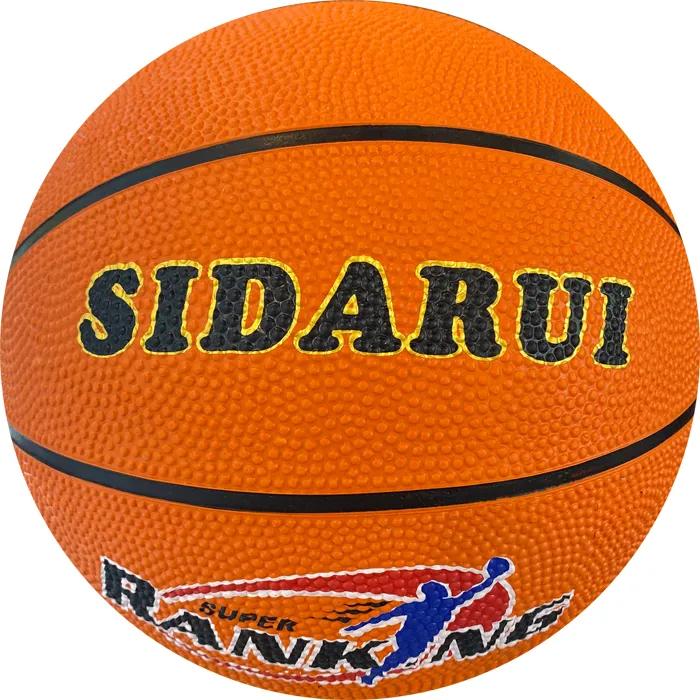
Size 7 Rubber Basketball Material Selection Guide for Outdoor Sourcing
Institutional procurement tenders for multi-environment sports equipment require a strict alignment between material resilience and budgetary parameters.
Facility managers and municipal purchasing officers often evaluate rubber formulations against specialized alternatives to control expenditure across high-frequency public installations.
Size 7 dimensions serve as the universal standard for adult and general institutional public procurement tenders. Rubber material selection provides the essential baseline durability required for abrasive outdoor surfaces like concrete and asphalt street courts.
Application versatility allows seamless deployment across both outdoor playgrounds and indoor gym floors for practice and casual play. Unit acquisition costs reflect molded polymer manufacturing rather than premium hand-stitched tanning processes, keeping large-scale purchasing predictable.
Universal Size 7 Dimensions for Adult and Institutional Public Tenders
Standardizing Procurement Through Uniform Measurement Frameworks
Size 7 dimensions operate as the baseline specification for adult and institutional public procurement tenders, establishing reliable sizing across municipal programs. Municipal agencies managing large-scale equipment acquisition rely on these uniform measurements to streamline vendor bidding processes and minimize administrative delays.
When purchasing officers specify exact dimensional baselines, cross-vendor comparison becomes straightforward and transparent. Standardized circumferences eliminate friction during bulk distribution cycles across regional public facilities.
Ergonomic Alignment and Facility Storage Integration
Adult-play ergonomics demand precise dimensional compliance to support consistent handling during competitive matches and practice sessions. Community sports facilities integrate these standardized units into existing storage racks and equipment cages without requiring specialized spatial adjustments. Facility supervisors depend on predictable storage footprints to organize heavy inventory efficiently across multi-court municipal centers.
Procurement schedules benefit directly from this spatial compatibility. Equipment handling efficiency improves when bulk shipments match pre-existing infrastructure dimensions across schools and public recreation centers.
Rubber Material Selection for Baseline Durability on Abrasive Outdoor Surfaces
Vulcanized Elastomer Properties on Concrete Courts
Molded polymer composition withstands high-friction concrete environments without premature degradation during continuous athletic sessions. Heavy foot traffic across open-air playgrounds demands surface compounds capable of resisting thermal friction and aggregate abrasion without structural failure.
Synthetic elastomeric structures absorb localized impact forces effectively across municipal athletic grounds. Procurement planners evaluate these performance traits to ensure long-term utility across public recreation installations.
Comparative Wear Resistance Against Delicate Alternatives
Natural leather constructions deteriorate rapidly when exposed to the grit and moisture of unsealed municipal asphalt. Industrial rubber configurations outperform delicate alternatives by maintaining structural integrity under continuous mechanical abrasion on playgrounds. Facility operators managing open-air arenas rely on this polymer durability to reduce replacement frequency across high-frequency sports programs.
Documentation verification requires direct coordination to review batch resilience parameters for municipal tenders.
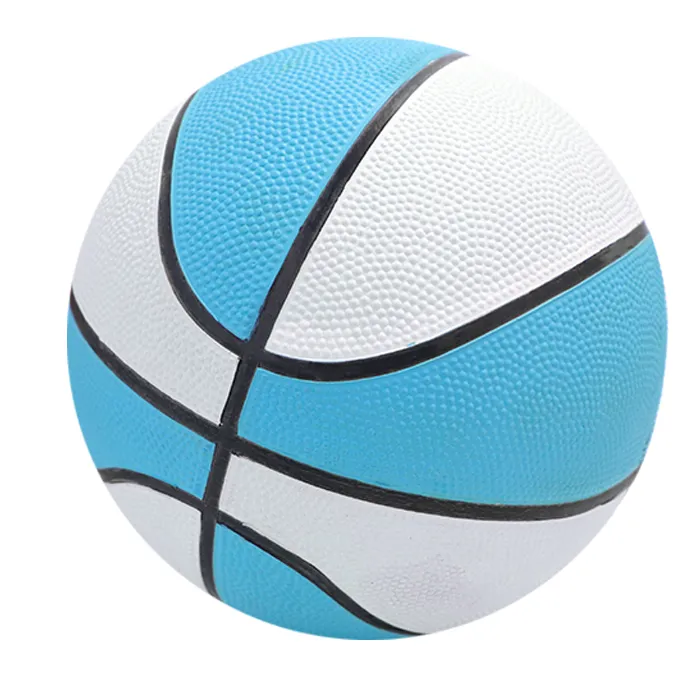
Application Versatility Across Outdoor Playgrounds and Indoor Gym Floors
Multi-Environment Facility Deployment Parameters
Seamless transition between open-air arenas and indoor gym floors defines the operational utility of size 7 rubber basketballs in municipal recreation centers. Because molded polymer compounds maintain consistent friction profiles across abrasive concrete and finished timber surfaces, maintenance personnel avoid purchasing separate inventory batches for distinct zones. Facility managers supervising mixed indoor-outdoor recreation areas rely on this material stability to support back-to-back scheduling without encountering grip degradation or equipment failure.
Casual play sessions and daily practice drills place varied mechanical demands on athletic equipment during peak operating hours. When community centers host overlapping programs ranging from asphalt street court matches to indoor training camps, uniform handling dynamics eliminate player adjustment friction. The resilient polymer matrix absorbs high-impact loads consistently, ensuring reliable rebound performance regardless of whether the equipment operates on open-air playgrounds or sheltered hardwood gym floors.
Managing Equipment Rotation Across Mixed Recreation Zones
Operational flexibility depends on predictable wear patterns when sports goods circulate between indoor and outdoor facilities under heavy daily usage. Procurement officers evaluating multi-environment deployment must ensure that the chosen polymer compound withstands abrasive outdoor particles without leaving non-marking residue on indoor gym flooring. To verify batch conformity and surface interaction safety before bulk distribution, procurement officers can request the relevant quality documentation from the supplier.
Supervising personnel often coordinate equipment rotation schedules to balance wear across different municipal sites during seasonal weather shifts. Standardized circumferences and tactile feedback remain constant throughout regional distribution networks. Institutional buyers determine replenishment intervals based on local court abrasiveness and overall user frequency, with exact thresholds varying according to seasonal tournament schedules and municipal storage capacities.
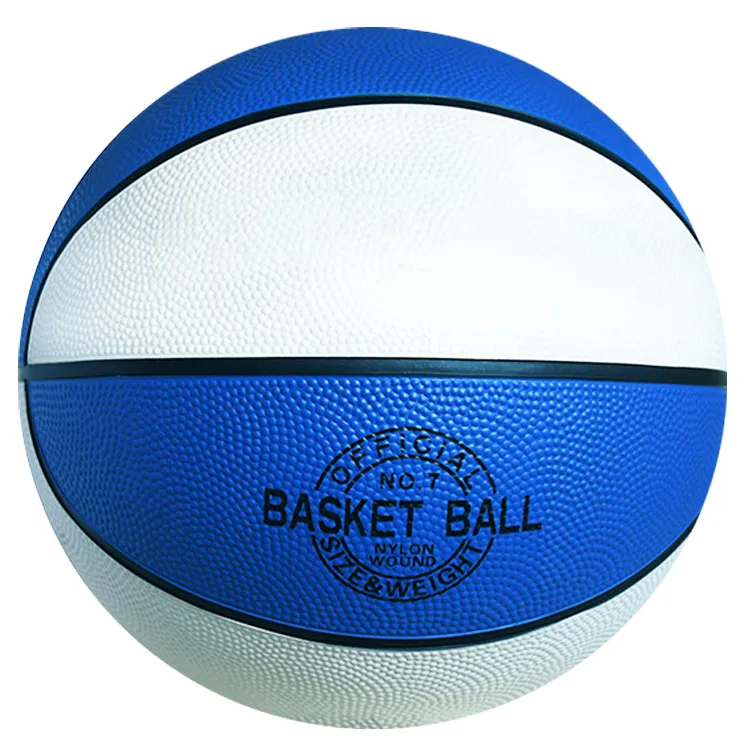
Unit Acquisition Cost Structure of Molded Polymer Versus Hand-Stitched Tanning
Budgetary Advantages in Bulk Re-Stocking Cycles
Annual replenishment programs for community parks and school districts benefit directly from the lower material baseline of molded rubber sports goods. Bulk volume orders of Size 7 units attract tiered wholesale discounts that scale according to final destination port logistics and seasonal purchasing windows.
Public purchasing agencies avoid unexpected expenditures by standardizing their equipment orders around high-volume polymer assets. This pricing predictability protects municipal balance sheets from the volatility inherent in imported artisanal hide markets.
Total Cost of Ownership in High-Frequency Public Venues
Operational lifespan calculations for open-air arenas and asphalt playgrounds indicate that utility-grade polymer construction withstands continuous abrasive friction without requiring frequent premature replacements. Facility administrators balance initial unit outlays against anticipated wear cycles to determine long-term operational expenditure across regional recreation networks.
Lower acquisition costs allow public recreation centers to deploy larger inventories across multiple community sites simultaneously. This broad distribution strategy ensures adequate equipment availability for casual play and competitive matches without exhausting municipal capital reserves.
Comparative Material Evaluation for Institutional Utility Basketballs
Rubber utility basketballs exhibit distinct operational advantages over alternative surface compositions when deployed in high-frequency public facilities. Polymeric molding technology delivers consistent friction coefficients across irregular outdoor aggregates without requiring frequent protective treatments.
Specialized leather alternatives demand sheltered storage environments and controlled humidity levels to prevent rapid surface degradation during competitive matches. Municipal procurement budgets remain protected against excessive replacement cycles because molded elastomeric compounds absorb direct impact shock more reliably than organic hides.
Purchasing officers evaluating multi-environment sports inventory analyze structural trade-offs across material classifications before finalizing bulk tender quantities. Facility administrators balance upfront capital expenditure against anticipated replacement frequencies dictated by daily court conditions.
| Material | Application | Suitability for Humid Environments | Price Tier |
|---|---|---|---|
| Rubber | Outdoor courts, indoor gym floors, practice, casual play, competitive matches, street courts, playgrounds, open-air arenas | High resistance to moisture penetration and hydrolytic degradation | Lower acquisition cost suitable for bulk institutional tenders |
| Specialized leather alternatives | Indoor gym floors, competitive matches | Vulnerable to moisture absorption, requiring climate-controlled storage | Higher capital expenditure per unit |
Procurement frameworks prioritize total cost of ownership by matching specific polymer formulations directly with designated regional deployment sites.
Aligning Sourcing Parameters with High-Frequency Facility Requirements
Synthesizing Material Criteria with Operational Realities
Procurement officers balancing heavy public usage across community sports centers rely on direct alignment between daily wear patterns and raw polymer specifications. When municipal budgets dictate long replacement cycles, selecting utility-grade rubber eliminates the financial friction associated with frequent part swaps in high-friction environments.
Facility managers evaluate local foot traffic volumes against elastomer resilience thresholds to determine whether to deploy inventory in open-air complexes or covered gymnasiums. This assessment relies strictly on the operational demands of the destination environment rather than arbitrary aesthetic preferences.
Matching Court Environments with Polymer Formulations
Open-air asphalt surfaces demand high-density compounds that withstand continuous particulate abrasion without losing structural integrity during competitive play. Conversely, indoor gym floors require balanced traction capabilities that prevent surface scuffing while maintaining reliable grip for institutional users.
Purchasing decisions depend heavily on annual procurement volumes and destination port logistics, requiring careful alignment between delivery schedules and regional school league calendars. Avoiding specialized leather alternatives in abrasive public spaces prevents premature budget depletion and ensures long-term operational sustainability for municipal sports programs.
Frequently Asked Questions
Size 7 dimensions function as the universally accepted baseline for adult-focused public tenders and community facilities. This uniform measurement allows purchasing officers to streamline vendor bidding processes and ensures seamless distribution across regional schools without requiring custom storage rack adjustments.
The molded polymer structure provides essential baseline resilience against high-friction asphalt and concrete surfaces. This composition resists premature degradation under constant friction, making it suitable for unpaved playgrounds and open-air arenas where delicate synthetic alternatives degrade quickly.
Facility managers supervising mixed recreation spaces can deploy this product across outdoor playgrounds and indoor gym floors for practice or casual play. The balanced handling profile supports multi-environment recreational routines without requiring separate equipment pools for different zones.
Unit acquisition costs for molded polymer construction sit significantly lower than hand-stitched leather alternatives. This economic structure allows institutional buyers to manage large-scale re-stocking cycles predictably while keeping operational overhead controlled across high-frequency facilities.
Selection depends entirely on the abrasiveness of the playing surface and the frequency of exposure to moisture. Facilities prioritizing multi-environment utility across outdoor asphalt and open-air arenas achieve lower total operational costs by deploying robust polymer units instead of delicate specialized leathers.
Conclusion
Summarizing institutional deployment priorities confirms that molded polymer construction delivers dependable durability across municipal sports programs without escalating baseline acquisition budgets.
Destination port logistics and total order volume determine final shipping schedules, ensuring bulk deliveries align with regional distribution timelines.
Purchasing officers are directed to request a sample or initiate a formal bulk tender inquiry based on their facility requirements.