
By [Author Name], [Author Title] at Hebei Starry Sports Goods Co, Ltd.

When most people think of a soccer ball, the familiar Size 5 comes to mind – the standard for professional matches and adult play. However, the world of soccer balls is far more diverse, catering to a range of specific needs and applications. For buyers and industry professionals seeking the smallest soccer ball size, the intent can vary significantly, from specialized training equipment for very young children to unique promotional items or even components in larger industrial or artistic installations. This isn't a casual consumer search; it often points to a B2B requirement where specific dimensions, performance characteristics, and sourcing reliability are paramount.
The global soccer market, while dominated by Size 5 balls which hold over 51% of the market share according to Mordor Intelligence, also has a significant, albeit more niche, demand for smaller variants. These balls serve critical developmental roles for aspiring young athletes, offering a more manageable size and weight that allows for proper technique development and reduces the risk of injury. Furthermore, in the realm of wholesale export and OEM manufacturing, understanding these smaller sizes is key to fulfilling diverse client orders and expanding market reach. The "smallest" could refer to Size 4, Size 3, or even custom-miniature sizes designed for promotional giveaways or decorative purposes. Each presents its own manufacturing challenges and market opportunities.
As an international trade specialist with deep roots in sports ball manufacturing, we recognize that a search for "smallest soccer ball size" often signals a need for a reliable supplier capable of precision manufacturing and consistent quality across a spectrum of ball sizes. Buyers in this segment are typically looking beyond off-the-shelf consumer products. They might be procurement managers for youth sports academies, marketing directors for brands seeking unique promotional merchandise, or even engineers looking for spherical components with specific material properties. The distinction between these needs is crucial for delivering the right product. For instance, a ball intended for a five-year-old requires different durability and safety standards than a miniature ball designed for a corporate branding event.
The complexities of international sourcing demand a supplier who not only understands these product variations but also possesses the operational expertise to manage logistics, quality control, and export documentation seamlessly. This includes ensuring compliance with relevant safety standards, managing lead times effectively, and providing clear, technical specifications that align with buyer expectations. The growth trajectory of the soccer ball market, projected to reach USD 9.97 billion by 2031 at a CAGR of 2.77% (Mordor Intelligence), highlights the overall robust demand, and within this, the specialized segments for smaller balls continue to play a vital role in grassroots development and brand engagement.
At Hebei Starry Sports Goods Co, Ltd., we pride ourselves on our comprehensive manufacturing capabilities, which extend to a wide range of soccer ball sizes. Our established presence in the foreign trade market since 2016, coupled with our robust production capacity of over 5 million units annually, allows us to cater to these specialized demands with precision and efficiency. Whether you are looking for Size 3 balls for early-stage player development, Size 4 for junior leagues, or even custom miniature versions for promotional campaigns, our team has the technical knowledge and manufacturing prowess to deliver. We understand the nuances of material selection, panel stitching or thermal bonding, and inflation pressures required for optimal performance and durability in each size category. This deep dive into the "smallest soccer ball size" category aims to clarify the landscape for B2B buyers, highlighting why sourcing from an experienced and capable manufacturer is essential for success.
A search for "smallest soccer ball size" is rarely a simple consumer query. In the B2B international trade landscape, it often signals a highly specific requirement driven by a particular application or market segment. Understanding this intent is paramount for delivering targeted solutions and fostering successful business relationships. We observe several primary intent categories:
Recognizing these distinct intents allows us to tailor our communication and product offerings. For developmental sports, we emphasize safety, skill-building benefits, and compliance with youth standards. For promotional items, we highlight customization capabilities, branding potential, and cost-effectiveness for bulk orders. For specialized training, we delve into technical details and material properties. For wholesale clients, our focus is on factory capacity, quality control, competitive pricing, and export logistics. This nuanced understanding ensures that when a buyer searches for the "smallest soccer ball size," they find a partner who truly understands their objective, not just a generic product listing.
The demand for the smallest soccer ball size isn't merely a fringe curiosity; it's a testament to the sport's pervasive reach and the evolving needs within its ecosystem. From professional training grounds to marketing suites and early childhood development programs, these smaller balls occupy crucial niches. Understanding these applications helps our B2B clients identify new opportunities and precisely match products to market demands.
This is undeniably the largest segment for smaller soccer balls, primarily Size 3 and sometimes Size 4. For children aged 5-8 (often categorized as U6, U7, U8), a smaller, lighter ball is essential. It allows them to:
The global soccer market, while valuing established segments, sees sustained growth in youth participation. Reports indicate a focus on grassroots development, and this directly translates to consistent demand for appropriately sized equipment. Ensuring these balls meet safety standards (like EN71 in Europe) and have durable construction is paramount for this segment.
For marketing departments and event organizers, miniature soccer balls – often custom-branded – serve as effective promotional tools. These can range from desktop novelties to handouts at sports expos or fan zones. The appeal lies in:
These are typically manufactured with lightweight materials and can be produced in various colors, with printing capabilities for detailed logos. The "smallest" here refers to novelty sizes, often significantly smaller than Size 3, sometimes even palm-sized or smaller, designed for display rather than play.
Beyond basic youth development, coaches and trainers might employ very small, sometimes specific types of balls for advanced skill work. These could include:
These applications often require precise specifications regarding weight, bounce, and surface texture, demanding a manufacturer with rigorous quality control.
In some niche interior design projects or for sports-themed establishments, miniature soccer balls can be used as decorative elements. These might be custom-made or standard novelty sizes, valued for their aesthetic appeal rather than functional performance.
As a manufacturer experienced in producing a wide range of soccer balls, Hebei Starry Sports Goods Co, Ltd. is equipped to serve all these diverse applications. We understand that a Size 3 ball for a U6 team requires different material resilience and construction than a 3-inch promotional ball. Our ability to handle OEM/ODM orders means we can tailor specifications – from material type and panel construction to printing and packaging – to meet the unique demands of each of these specialized market segments.
When discussing the smallest soccer ball size in a B2B context, precise technical specifications are non-negotiable. These are the parameters that differentiate functionality and ensure suitability for specific applications. While standard FIFA sizing guidelines exist for official match balls (Size 5), youth and novelty balls have variations. Here’s a breakdown of what buyers typically look for:
FIFA (Fédération Internationale de Football Association) defines standards primarily for Size 5, but these are often adapted for younger age groups:
Beyond official youth sizes, the market for promotional and novelty balls opens up to much smaller dimensions. These are not standardized by FIFA but are defined by manufacturers based on client needs and manufacturing capabilities:
When sourcing these smaller balls, procurement professionals should focus on:
At Hebei Starry Sports Goods Co, Ltd., we meticulously control these specifications during manufacturing. Our OEM capabilities allow us to produce balls that precisely match your required dimensions, weights, and material properties, whether for a Size 3 youth league or a custom-branded micro-ball. We maintain detailed spec sheets for each size and construction type, ensuring transparency and consistency for our international clients.
mini soccer ball size mini soccer ball size 1 mini soccer size
The performance, durability, and feel of any soccer ball, regardless of size, are fundamentally determined by its materials and construction methods. For the smallest soccer ball size, especially those intended for play, these factors are critical for ensuring they offer a positive user experience and withstand the rigors of training or competition. As a dedicated manufacturer, Hebei Starry Sports Goods Co, Ltd. leverages established techniques to produce high-quality balls across various sizes and applications.
The choice of cover material significantly impacts the ball's characteristics:
The bladder, typically made of butyl rubber or latex, is crucial for air retention. Butyl bladders offer superior air retention, minimizing the need for frequent re-inflation, which is practical for busy youth teams or promotional items.
The method used to join the ball's panels is a key determinant of its quality and performance:
Our factory is equipped to handle all these material and construction variations. Whether you require cost-effective PVC balls with machine stitching for a large promotional order, or high-performance PU balls with thermal bonding for a competitive youth league, we have the expertise. We work closely with clients to select the optimal combination of materials and manufacturing processes to meet their specific budget, performance requirements, and brand image. Understanding these technical details is fundamental to our role as a reliable international supplier, ensuring that the smallest soccer ball size ordered meets the highest standards of quality and functionality.
For procurement professionals tasked with sourcing the smallest soccer ball size, the process requires more than just finding the lowest price. It involves a strategic approach that balances cost, quality, reliability, and delivery timelines. Based on our experience in international B2B trade, here are key considerations to ensure a successful procurement cycle.
Before engaging suppliers, clearly articulate your requirements:
Vague requirements lead to miscommunication and incorrect products. A clear spec sheet is your best tool.
Don't just look at price tags. Assess potential suppliers holistically:
Requesting samples is crucial. Evaluate the sample's material quality, construction integrity, printing accuracy, and overall feel.
Production and shipping times can significantly impact your project timeline:
A reliable supplier will provide realistic estimates for both production and delivery.
While price is a factor, focus on overall value. Understand payment terms – often a deposit upfront with the balance due before shipment for international orders. Be wary of significantly lower quotes that seem too good to be true; they might indicate compromises on quality or hidden costs.
Hebei Starry Sports Goods Co, Ltd. is committed to providing transparent and efficient procurement experiences. We provide detailed quotes, clear specifications, realistic lead time estimates, and robust quality control. Our goal is to be more than just a supplier; we aim to be a trusted partner in your supply chain, ensuring you receive the right smallest soccer ball size, on time and to specification.
Navigating the complexities of sourcing sporting goods internationally demands a supplier with deep manufacturing expertise and a commitment to quality. At Hebei Starry Sports Goods Co, Ltd., we are not merely traders; we are dedicated manufacturers with over a decade of experience in producing high-quality volleyballs, basketballs, and soccer balls. Our operations are geared towards meeting the diverse needs of global B2B clients, including those seeking the smallest soccer ball size for specialized applications.
Established in November 2014, we entered the foreign trade market in 2016, rapidly building a reputation for reliability and quality. Our facility in Cangzhou, Hebei Province, covers a substantial 67,000 square meters and is staffed by 316 skilled workers. This infrastructure allows us to achieve an impressive annual output of over 5 million sports balls. This scale of production ensures we can handle large-volume orders for wholesale distributors and meet tight deadlines for promotional campaigns.
While we are known for our core products – volleyballs, basketballs, and soccer balls – our expertise extends to variations in size, material, and construction. Whether you require:
We excel in OEM (Original Equipment Manufacturer) and ODM (Original Design Manufacturer) services. This means we can manufacture balls to your exact specifications (OEM) or work with you to design and develop a unique product (ODM). Our design team can assist with everything from material selection to panel design and colorways, ensuring your product stands out.
Quality is not an afterthought; it's integrated into every stage of our production process. From raw material inspection to in-process checks and final product testing, we adhere to strict quality control measures. Our commitment to excellence has allowed us to build a customer base that spans Asia, Europe, and South America, earning high praise from professional athletes, sports enthusiasts, and industry insiders alike. With a total revenue exceeding 30 million in 2023 and customer coverage in 80% of global regions, our operational capacity and market reach are well-established.
Our strategic location near Tianjin Port provides a significant logistical advantage, facilitating efficient and cost-effective international shipping. We understand the intricacies of export procedures and work diligently to ensure timely delivery to our global partners.
Choosing Hebei Starry Sports Goods Co, Ltd. means partnering with a manufacturer that combines extensive experience, robust production capacity, a dedication to quality, and a customer-centric approach. We are ready to fulfill your requirements for any size of soccer ball, delivering value and reliability with every order.
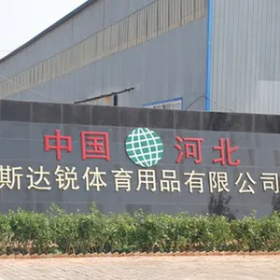
Real feedback from our clients highlights the practical benefits of partnering with Hebei Starry Sports Goods Co, Ltd. for their sporting goods needs, including specialized ball sizes.

"We switched to Hebei Starry for our Size 3 training balls last season, and the consistency has been a game-changer. The durability is excellent, holding up well even with daily use by our U7 and U8 teams. They're responsive, and the lead times are reliable, which is crucial for our ordering cycles. Definitely recommend for anyone needing quality youth balls."

"We ordered custom-branded mini soccer balls for a promotional event in Cancun. The print quality was superb, capturing our logo details perfectly on the small balls. The team was very helpful in selecting the right size and material for our budget, and the delivery arrived well within our deadline. A fantastic promotional item!"

"We import Size 4 and Size 5 soccer balls from Hebei Starry for the Japanese market. Their commitment to quality control, especially with the thermally bonded balls, is impressive. The balls maintain excellent sphericity and air retention. Their export process is smooth, and they are always competitive on pricing for bulk orders."
A: The smallest standard size officially recognized for play is Size 3, typically recommended for children aged 8 and under. It has a circumference of 58-60 cm and a weight of 300-340 grams.
A: Yes, absolutely. We manufacture custom mini soccer balls and micro balls for promotional and novelty purposes, which can be significantly smaller than Size 3, down to a few inches in diameter. We can tailor these to your exact specifications.
A: Lead times vary based on order volume, customization, and current production schedules. For a typical bulk order of Size 3 or novelty balls, production can range from 30 to 60 days, excluding shipping time. We provide precise estimates upon receiving your order details.
A: Thermally bonded balls, even in smaller sizes like 3 or 4, offer superior sphericity, improved flight consistency, and enhanced durability compared to stitched balls. They also absorb less water, maintaining their performance in wet conditions.
A: Yes, OEM and ODM services are a core part of our business. We can manufacture soccer balls to your exact design specifications, including size, materials, panel configuration, colors, and branding. Please contact us with your specific requirements.
Whether you need reliable Size 3 training balls for a youth academy, eye-catching custom mini balls for a marketing campaign, or any other specific soccer ball requirement, Hebei Starry Sports Goods Co, Ltd. is your trusted manufacturing partner.
WELCOME TO INQUIRE


LATEST NEWS
Crafted with precision and care, our soccer ball features a durable rubber core that ensures excellent bounce and resilience. The rubber material is not only lightweight but also provides the ideal amount of grip, allowing players to control the ball with ease. This means you can focus on perfecting your shots, passes, and tricks without worrying about the ball slipping away from you.
26,04 , 2026
Custom Mini Basketball Ball for Branding and Promotional Use
In today’s competitive marketplace, brands are constantly searching for creative, cost-effective way
READ MORE
24,04 , 2026
Size Guide for Basketballs Wholesale: From Youth to Professional
Choosing the right basketball size is one of the most important decisions for wholesalers, sports eq
READ MORE
23,04 , 2026
Outdoor vs Indoor Basketballs Wholesale: Key Differences
When sourcing basketballs in bulk, understanding the difference between outdoor and indoor models is
READ MORE