Sep . 04, 2026 17:26
Soccer is a global sport enjoyed by professional athletes, youth players, school teams, football academies, amateur clubs, and recreational players. Although the basic concept of the game is simple, choosing the right ball can make a significant difference to the playing experience. Factors such as size, weight, material, construction, surface texture, and visual design all influence how a soccer ball performs on the field.
Among the most common choices are soccer ball size 4 and soccer ball size 5. These two sizes serve different player groups and playing requirements. Size 4 balls are commonly associated with youth development and training, while size 5 balls are widely used for older youth players, adults, competitive matches, and general training. Understanding the differences can help buyers, coaches, parents, retailers, and sports organizations select the right product.
At the same time, customization has become an important trend in the sports equipment market. A custom soccer ball allows clubs, schools, brands, businesses, and event organizers to create products with personalized colors, logos, graphics, and patterns. Combined with an attractive soccer ball design, customized products can serve both sporting and promotional purposes.
Whether you are purchasing footballs for a youth academy, developing products for a sporting goods brand, or looking for an effective promotion football, understanding ball sizes and customization options is essential.

Understanding Soccer Ball Sizes and Their Applications
The size of a soccer ball generally corresponds to the player's age group and intended use. Selecting an appropriately sized ball can help players develop better control, passing, shooting, and dribbling skills.
A soccer ball size 4 is commonly used for youth players. It is smaller and lighter than a standard adult ball, making it easier for younger athletes to handle. Children who are still developing fundamental football skills can benefit from using a ball that matches their physical abilities.
For youth training programs, schools, and football academies, size 4 balls can be particularly useful. Players can practice passing, receiving, shooting, and ball control without having to manage the size and weight of a full-size adult football. This can make training more comfortable and encourage young players to develop confidence.
The design and construction of a size 4 ball can vary depending on the manufacturer. Training models may prioritize durability, while higher-performance models may focus more heavily on touch, flight stability, and consistency. Buyers should therefore evaluate the materials and construction rather than relying on size alone.
By comparison, soccer ball size 5 is the standard size commonly associated with adult soccer. It is widely used by older youth players, adult recreational players, clubs, training organizations, and competitive teams. Because of its larger size and weight, players need stronger kicking technique and better control.
The term soccer balls 5 is often used when buyers are searching for multiple size 5 products or comparing different size 5 models. These footballs can be manufactured with different outer materials, panel configurations, bladder systems, and surface finishes.
For retailers, offering both size 4 and size 5 products can help serve a wider customer base. Parents and youth organizations may look for size 4 footballs, while adult teams and competitive players may require size 5 models. Providing multiple sizes also creates opportunities for sports brands to develop complete product ranges.
Size selection should always consider the player's age, training level, competition requirements, and intended environment. A ball that is too large or heavy can be difficult for younger players to control, while an appropriately sized ball can make training more enjoyable and productive.
Custom Soccer Ball Design and Manufacturing Options
Customization provides an opportunity to transform a standard soccer ball into a product that reflects a specific brand, team, event, or organization. A custom soccer ball can be developed with personalized colors, logos, names, graphics, patterns, and packaging.
For football clubs, customized balls can feature team logos and traditional colors. Schools can use their school name or mascot, while sports academies can create branded training equipment. Businesses and event organizers can also use customized footballs as promotional merchandise.
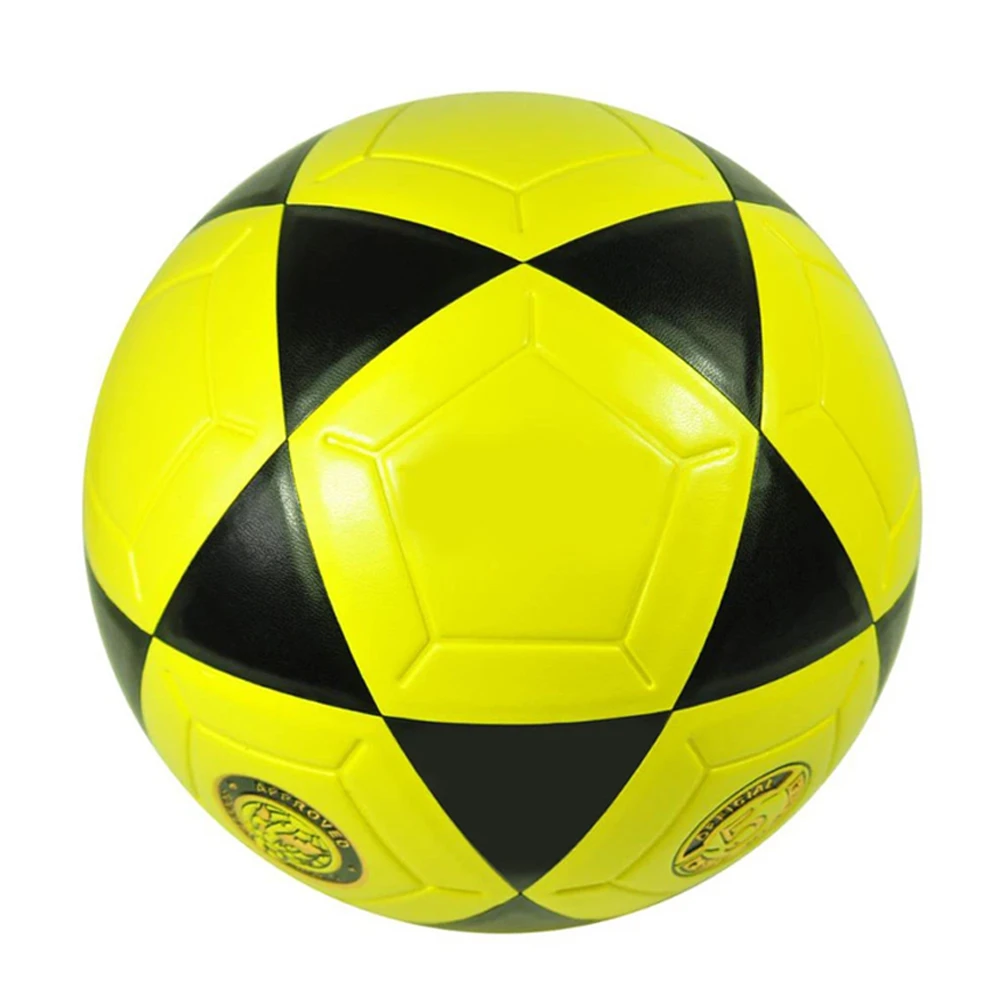
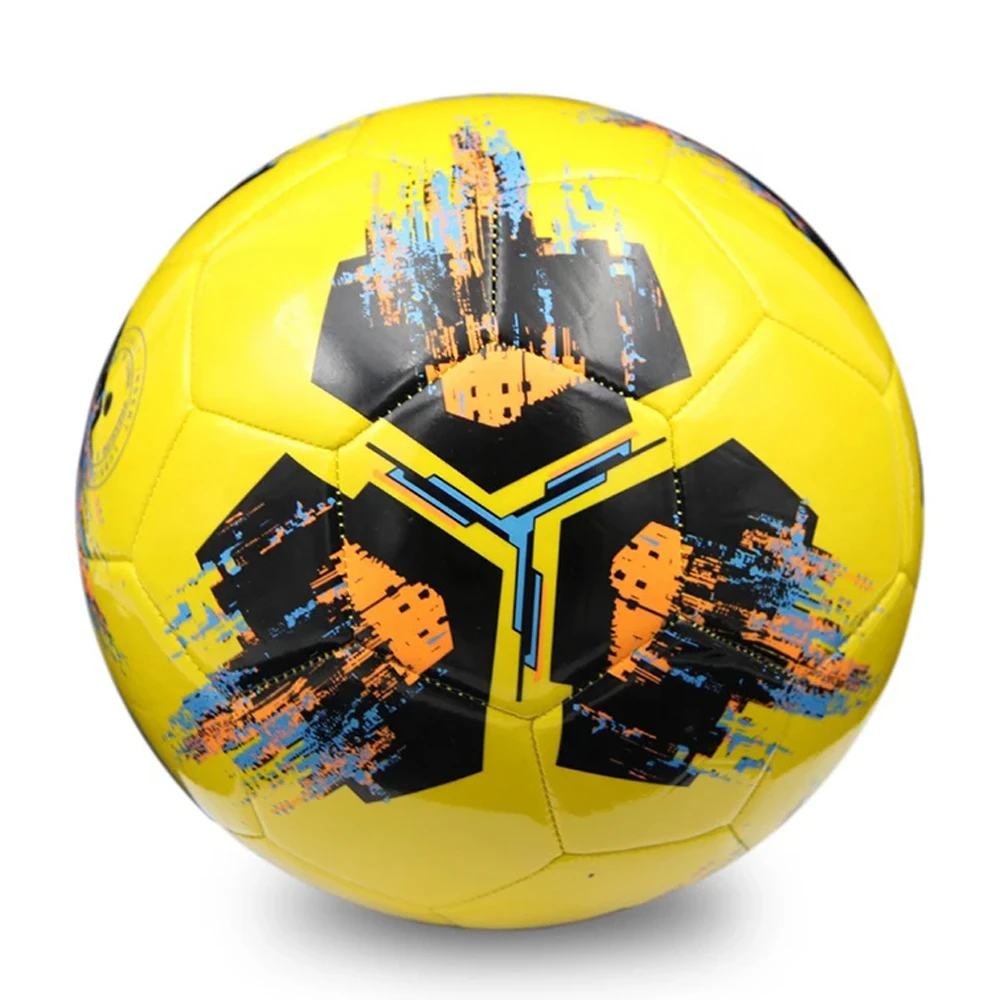
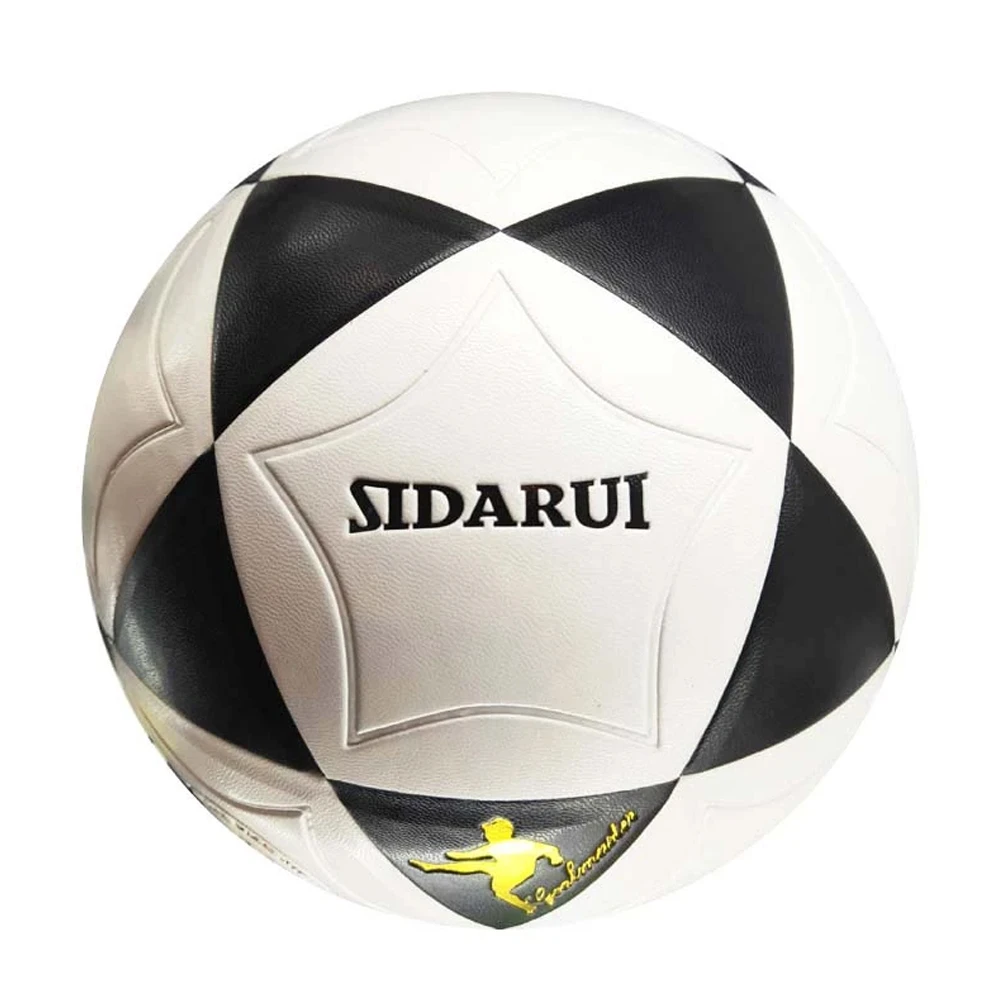
The soccer ball design is an especially important part of the customization process. A visually attractive design can make the product more recognizable and improve its appeal in retail environments. Designers can experiment with geometric graphics, contrasting panels, brand colors, logos, and modern patterns.
However, customization should not focus only on appearance. A good soccer ball needs to combine visual appeal with reliable construction and playing performance. The outer material, bladder, panel structure, stitching method, and surface finish all contribute to the final product.
Modern footballs may use PU, TPU, PVC, or other synthetic materials. PU is often selected for products where a softer touch and premium appearance are important, while PVC can provide a cost-effective solution for recreational and promotional applications. The appropriate material depends on the target market and intended use.
Panel construction is another important consideration. Footballs can be manufactured using machine stitching, hand stitching, or thermal bonding. Different construction methods can influence durability, shape retention, water resistance, and overall playing characteristics.
A manufacturer producing a custom soccer ball should also be able to provide different size options. Customers may request size 3 for very young players, soccer ball size 4 for youth training, or soccer ball size 5 for adult players and competitive use.
Customization can extend beyond the ball itself. Packaging can also be designed to match the customer's branding. Individual boxes, printed cartons, mesh bags, retail packaging, and customized labels can all help create a complete branded product.
For businesses purchasing in bulk, OEM and ODM services can provide additional flexibility. Customers may provide their own artwork or work with the manufacturer's design team to create a new visual concept. Before mass production, samples can be reviewed to ensure that colors, logos, dimensions, and surface details meet expectations.
Quality control is equally important. Manufacturers should check ball size, weight, roundness, pressure retention, surface appearance, stitching or bonding quality, and printing accuracy. Consistent production standards are particularly important for large orders because customers expect every batch to meet the agreed specifications.
Promotion Football Applications and Market Opportunities
A promotion football can be an effective marketing tool because it combines practical value with strong visual exposure. Unlike many disposable promotional items, a football can be used repeatedly in homes, schools, clubs, parks, and training facilities. Every time the ball is used, the printed logo or brand identity can remain visible.
Businesses can distribute customized footballs at sporting events, community activities, school programs, football tournaments, trade shows, and promotional campaigns. Sports brands can also use customized footballs to introduce new products or strengthen relationships with clubs and athletes.
The design should match the purpose of the promotion. For example, a youth-focused campaign may use bright colors and playful graphics, while a professional sports brand may prefer a more sophisticated and performance-oriented design. The right soccer ball design can help communicate the brand's identity while keeping the product attractive to players.
Promotional footballs can also be produced in different sizes. A company targeting children may choose soccer ball size 4, while a campaign associated with adult sports or professional football may use soccer ball size 5. This flexibility makes customized footballs suitable for different audiences.
Sports retailers can benefit from customization as well. Instead of offering only generic products, retailers can develop exclusive designs that differentiate their product range from competitors. Limited-edition colors, seasonal patterns, regional designs, and branded collections can all help create additional market opportunities.
When selecting a manufacturer, buyers should consider production capacity, customization capabilities, material quality, printing technology, sample development, packaging options, and delivery schedules. A reliable supplier should be able to communicate clearly about specifications and provide consistent quality across different production batches.
For international buyers, working with an experienced football manufacturer can also simplify product development. Instead of managing separate suppliers for different sizes and designs, customers can potentially source multiple products from one manufacturing partner. This can make purchasing, quality control, packaging, and logistics more efficient.
The future of soccer ball manufacturing is likely to combine performance, personalization, and visual innovation. Consumers increasingly expect sporting products to reflect their individual preferences, while clubs and businesses want products that communicate their identity. Customization can therefore become an important part of the modern football supply chain.
From youth training to adult competition, selecting the appropriate ball size is the first step toward creating a suitable product. Soccer ball size 4 offers a practical option for younger players, while soccer ball size 5 remains a versatile choice for older players and adults. For brands and organizations, a custom soccer ball can go even further by combining functional sports equipment with personalized branding.
With the right materials, construction, size, and soccer ball design, manufacturers can create products for training, competition, retail, events, and marketing campaigns. Whether the goal is to supply durable soccer balls 5, develop youth products, or create an eye-catching promotion football, customization provides an effective way to meet the diverse needs of today's global soccer market.