Mar . 27, 2026 16:43
In the world of professional football, the ball is no longer just an inflated sphere—it is a masterpiece of fluid dynamics and material science. As we move through 2026, the evolution of the soccer ball has accelerated, driven by the need for pinpoint accuracy, consistent flight, and sustainable manufacturing.
As a global leader in high-performance inflatable sports balls, Starry Sports remains at the forefront of this revolution. In this guide, we break down the three pillars of modern soccer ball design: Smart Technology, Surface Texture, and Computational Aerodynamics.
1. Thermal Bonding: The Seamless Revolution
For decades, soccer balls were either hand-stitched or machine-stitched. However, in 2026, Thermal Bonding has become the gold standard for professional match play.
Zero Water Absorption
Traditional seams, no matter how tight, act as entry points for moisture. On a rainy pitch, a stitched ball can gain up to 10% in weight, drastically altering its flight and feel. Starry Ball’s professional match series utilizes advanced thermal bonding technology to create a 100% seamless surface.
-
The Result: The ball maintains a constant weight and a "true" bounce from the first whistle to the 90th minute, regardless of weather conditions.
Perfect Sphericity
By eliminating internal knots and external ridges, thermal bonding ensures a perfectly round shape. This geometric perfection allows for a more linear response when the ball leaves a player's foot, reducing the "dead zones" common in lower-tier stitched balls.
2. Aerodynamics: The Science of Controlled Turbulence
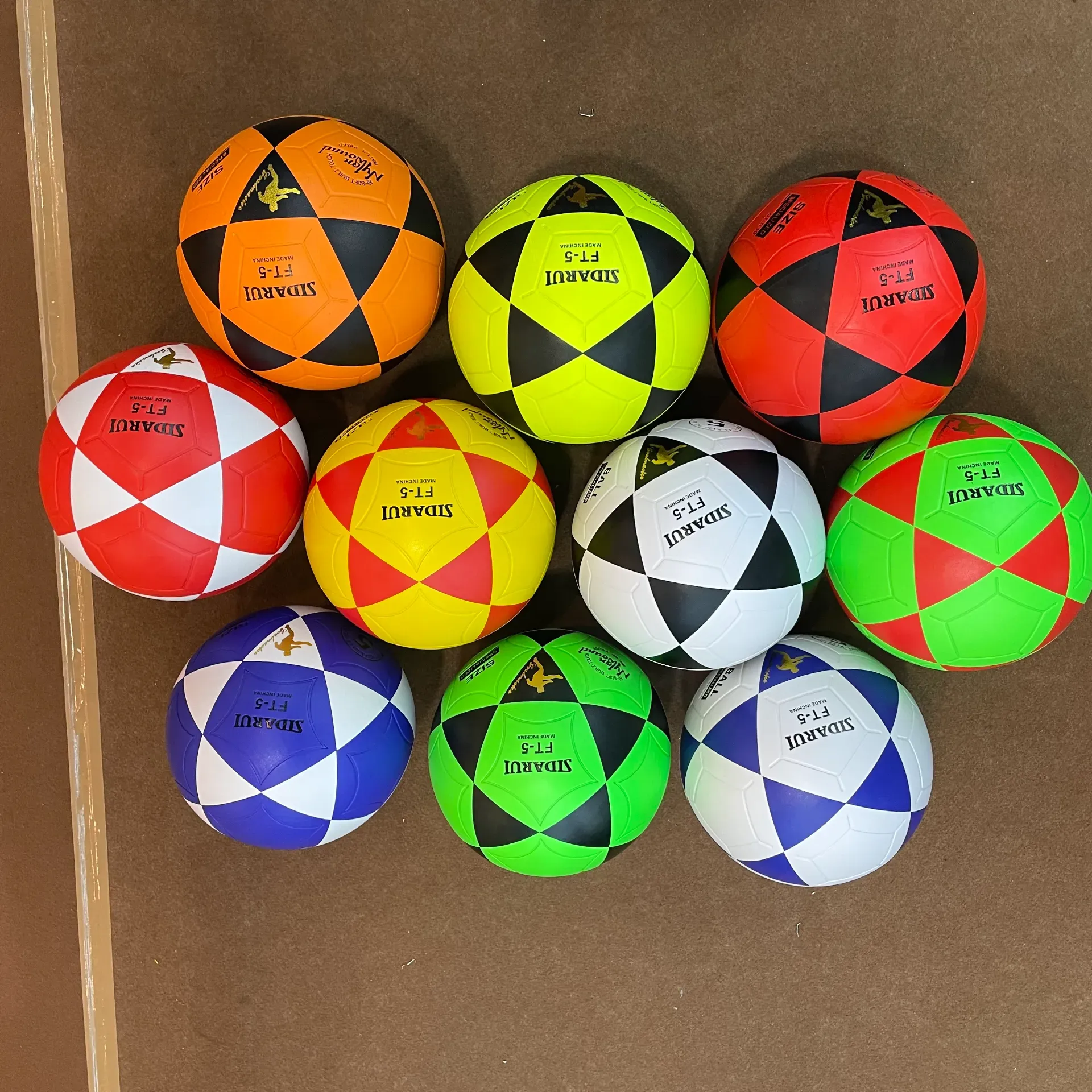
If you look closely at a modern Starry Sports match ball, you will notice the surface is far from smooth. In 2026, aerodynamics is about managing the "boundary layer" of air around the ball.
Debossed Grooves (Macro-Grooving)
When a ball travels at high speed without spin (the "knuckleball" effect), air pressure differences behind the ball cause it to wobble unpredictably. To solve this, Starry Sports incorporates macro-grooves—deeply embossed lines that act like the dimples on a golf ball.
-
The Benefit: These grooves "trip" the airflow, creating a thin layer of turbulence that stabilizes the ball's flight path. This leads to 20% more predictable trajectories for long-range strikes and crosses.
Micro-Textures and Grip
Micro-textures—essentially tiny raised dots or patterns—increase the coefficient of friction. This is vital for goalkeepers trying to catch a high-velocity shot and for strikers looking for that extra "bite" on the ball to generate top-spin.
3. Smart Ball Technology: Data in Every Kick
The "Internet of Things" (IoT) has officially hit the pitch. In 2026, elite footballs are no longer just targets; they are data-gathering hubs.
Integrated IMU Sensors
Top-tier soccer balls now feature suspended Inertial Measurement Units (IMUs) at their core. These sensors track:
-
Velocity and Spin: Real-time feedback on kick power (km/h) and rotation (RPM).
-
VAR Precision: Assisting officials with millimeter-accurate data on offside calls and goal-line technology.
Starry Sports is committed to bringing these professional-grade insights into high-end training environments, allowing youth academies to quantify player development with objective data.
4. Material Science: High-Performance PU & Sustainability
The "feel" of a soccer ball comes down to its outer skin. The industry trend in 2026 is the convergence of High-Elasticity PU and Bio-Based Materials.
-
Eco-Friendly Polyurethane: Starry Sports is moving toward carbon-neutral production, utilizing bio-based PU derived from renewable sources.
-
Recycled Polyester Scrim: The internal layers that maintain the ball's tension are now predominantly made from recycled PET (rPET).
-
Tactile Response: Modern PU materials offer better "shape memory," ensuring the ball returns to its perfect sphere immediately after a high-impact collision with a post or a boot.
5. From Professional Match Balls to Promotional Customization
Not every ball needs a microchip, but every ball benefits from these design trends. Starry Sports applies these aerodynamic principles across its entire range:
Match Balls: Focused on thermal bonding and aerodynamic grooves for elite competition.
Training Balls: Designed for extreme durability on turf or hard ground while maintaining a "pro-feel" texture.
Promotional Balls: Combining branding with high-quality printing techniques that don't peel or fade under stress.
Frequently Asked Questions (FAQ) of Soccer Balls
Q1: Does the "texture" of a ball really improve my shooting?
A: Absolutely. Texture increases the friction between your boot and the ball. This allows you to apply more spin, which is essential for "curving" the ball around a defensive wall or dipping it under the crossbar.
Q2: Why are thermally bonded balls more expensive?
A: The manufacturing process requires high-precision molds and expensive bonding machinery. However, the investment pays off in durability and water resistance, as the ball will last significantly longer and perform better than a cheaper stitched alternative.
Q3: Are Starry Sports balls FIFA compliant?
A: Yes. Our production lines are designed to meet or exceed FIFA Quality Pro standards for weight, circumference, roundness, bounce, and water absorption.
Q4: How do I choose between a 6-panel and 32-panel ball?
A: Modern 6-panel balls (thermally bonded) offer a more consistent surface for the pro game. Traditional 32-panel balls are often used for training as they provide a classic feel and are excellent for developing basic ball control.
Final Thoughts: The Future of the Beautiful Game
In 2026, the soccer ball is the intersection of physics, digital tech, and material engineering. From the seamless thermal bonding techniques to the aerodynamic grooves engineered by Starry Sports, every innovation serves one purpose: to make the game faster, fairer, and more exciting.
Whether you are an academy looking for the best training tools or a brand seeking premium custom soccer balls, staying ahead of these design trends is key to your success on the pitch.