By  Alex Chen, Senior Export Manager at Hebei Starry Sports Goods Co, Ltd
When sourcing sports equipment, particularly for international distribution or large-scale sporting events, precision in specifications is paramount. The official size of a volleyball ball isn't merely an arbitrary dimension; it's a carefully defined standard that dictates trajectory, speed, player interaction, and overall game integrity. For anyone involved in the import, distribution, or manufacturing of sports goods, understanding these specifications is the first step towards ensuring quality and performance. At Hebei Starry Sports Goods Co, Ltd, we've been deep in the manufacturing and export of sports balls since 2014, and we've seen firsthand how critical adherence to these standards is for our clients across Asia, Europe, and South America.
The game of volleyball, whether played indoors on polished courts or outdoors on sandy beaches, relies on a consistent and predictable ball. This consistency is built upon globally recognized regulations. For FIVB (Fédération Internationale de Volleyball) sanctioned events, and by extension for most professional and competitive play, the ball must conform to specific dimensions, weight, and pressure. This isn't just about appearance; it's about the physics of the game. A ball that deviates too much from the official size might fly erratically, react unpredictably off players' hands, or affect the strategic flow of rallies. Imagine a set that's slightly too light or too large – it could alter the intended arc of a spike or the accuracy of a pass, fundamentally changing the challenge and skill involved.
The sports equipment market is dynamic. While the core specifications for a volleyball remain stable, advancements in materials science, manufacturing techniques like thermal bonding, and design innovations continuously shape the performance characteristics of the balls produced. Understanding these nuances is crucial for B2B buyers looking to source high-quality products that meet both official standards and market expectations. We often work with importers who are looking to differentiate their offerings, whether that means focusing on ultra-durable training balls, high-performance competition balls, or specialized balls for specific variants of the sport like beach volleyball. Each requires a keen eye on how size, weight, and construction interact.
Looking at the broader sports equipment market, industry reports highlight consistent growth. For instance, the global volleyball market is projected to reach USD 979.85 million by 2034, with a CAGR of 7.2% (Source: Zion Market Research). Volleyballs themselves constitute a significant share of this, driven by increasing participation in both indoor and beach volleyball, youth sports programs, and the constant need for equipment upgrades. As a supplier, we see this translate into demand for balls that are not only regulation-compliant but also offer superior grip, durability, and flight consistency. The official size is the baseline; the real value for buyers often lies in the quality of materials and manufacturing that achieve that standard with excellence.
Procurement decisions at this level involve more than just picking a product from a catalog. They involve understanding the supply chain, quality control processes, and the supplier's capacity to meet large orders consistently. For example, when sourcing for a national sports federation or a large distributor, lead times, minimum order quantities (MOQs), and the ability to provide certifications become as important as the ball's dimensions. We pride ourselves on our transparency in these areas, offering factory tours (virtual or in-person) and detailed documentation to build that trust. Our own experience, having entered the foreign trade market in 2016, has taught us the value of robust communication and reliable delivery, especially for international clients who rely on us to meet critical deadlines for sporting seasons or events.
The quest for the "official size" also brings up nuances between different governing bodies or even specific tournament requirements. While the FIVB is the primary international federation, national federations or specific leagues might have slight variations or preferences, though these are less common for core specifications like size. For OEMs and ODMs, this means being adaptable and capable of producing to client-specific requirements if they fall within reasonable parameters or are explained clearly. Our team is adept at discussing these finer points with clients, ensuring that the volleyballs we produce align perfectly with their intended market and competitive level. The goal is always to provide a product that enhances the game, from grassroots development to elite competition.
Let's get down to the specifics. According to FIVB regulations, an official indoor volleyball must adhere to the following dimensions and weight:
These measurements are critical. The circumference defines the overall size, influencing how players grip, pass, set, and hit the ball. The weight is calibrated to ensure a proper feel and predictable momentum without being too heavy to handle or too light to control against air resistance or powerful shots. The internal pressure determines the ball's bounce and firmness, a key factor in its responsiveness during play.
For beach volleyball, the specifications are slightly different to accommodate the unique playing environment:
These differences are not accidental. Beach volleyball involves more open-hand control and often deals with variable wind. The slightly larger, softer ball allows for better control in these conditions and reduces the sting of impact on players' arms and bodies during extended play. For wholesale buyers, understanding these distinctions is vital if you're catering to both indoor and beach volleyball markets.
It’s important for purchasing managers to remember that while FIVB sets the benchmark, other organizations or recreational leagues might use slightly modified standards. However, for any competition aiming for international recognition or professional play, FIVB compliance is the gold standard. We regularly produce balls that meet these exact specifications, ensuring our clients can confidently supply them for official use. The consistency in our production process, from material sourcing to final inflation and testing, guarantees that each ball leaves our facility within these tight tolerances.
The seemingly minor variations in official size, weight, and pressure have a profound impact on the dynamics of a volleyball match. This is where the technical expertise of a manufacturer like Hebei Starry Sports Goods truly comes into play.
Trajectory and Flight Path: A ball with the correct circumference and weight will exhibit predictable aerodynamics. This allows players to judge distances accurately for serves, passes, and attacks. If a ball were significantly larger or smaller, or if its weight distribution was off, its flight path would become erratic, making precise plays much harder. The optimal pressure ensures the ball holds its shape well, minimizing flutter and spin variations that aren't intentionally imparted by the player.
Player Interaction and Control: The feel of the ball against a player's arms, hands, and head is crucial. The official size and pressure contribute to a comfortable yet responsive contact. For setters, the size allows for a consistent grip and accurate finger placement for precise sets. For hitters, it means knowing how the ball will compress and rebound off their forearm for a powerful, controlled swing. The lower pressure in beach volleyball balls, for instance, makes them feel softer on impact, which is essential for the repetitive open-hand touches common in that discipline.
Game Speed and Strategy: The speed at which the ball travels, influenced by its weight and the force applied, dictates the pace of the game. Official specifications ensure a balanced speed that allows for fast-paced rallies without making the game unmanageable or overly reliant on sheer power. It strikes a balance between agility and momentum, enabling complex strategies involving quick transitions, defensive digs, and strategic placements.
Consistency Across Matches: For tournaments and leagues, using balls of a consistent official size and weight ensures fair competition. Players can rely on the equipment behaving the same way from one match to the next, allowing skill and strategy, rather than equipment variance, to be the deciding factors. This is a key reason why manufacturers invest heavily in quality control and adhere strictly to FIVB standards.
We understand that for distributors and retailers, providing equipment that meets these performance expectations builds trust and customer loyalty. When a buyer receives a shipment of volleyballs from us, they can be confident that these balls have been manufactured to exacting standards, ensuring they perform as expected on the court. Our commitment to quality means that the "official size" is not just a number, but a guarantee of a certain level of playability and fairness.
While the official size is paramount, the materials and construction methods used to achieve it are what define a ball's durability, feel, and performance over its lifespan. As a seasoned manufacturer, we know that the "official size" can be met with varying quality.
Cover Materials: Modern volleyballs typically use synthetic leather, specifically microfibers or polyurethane (PU). These materials offer a good balance of softness, grip, and durability. For indoor balls, a slightly firmer PU might be used, while beach volleyballs often feature softer, water-resistant synthetic leathers. The texture and panel construction of the cover are engineered to enhance grip, allowing players to control the ball more effectively during serves and passes.
Bladder: The internal bladder is usually made of butyl rubber or latex. Butyl rubber is preferred for its excellent air retention, which means the ball stays inflated longer, reducing the need for frequent re-inflation – a practical consideration for both players and facility managers. Latex bladders offer a slightly softer feel but tend to lose air more quickly.
official volleyball ball size size of a volleyball size of volleyball
Construction Methods:
The choice of construction directly impacts the ball's performance and longevity. For buyers looking for wholesale options, understanding the construction method helps in differentiating between training balls, mid-range competition balls, and top-tier professional balls, even if they all share the same "official size." We offer a range of construction types to meet diverse market needs and price points. For example, our thermally bonded balls offer unmatched quality for those seeking the best performance, while our robust stitched or laminated options provide excellent value for training and recreational use.
For procurement directors, asking about the specific materials and construction methods used is a critical step in quality assurance. It helps in forecasting product lifespan, understanding potential warranty claims, and aligning the product with the expected market positioning. We provide detailed specifications for each product line, ensuring our clients have all the information they need to make informed purchasing decisions.
Sourcing official-sized volleyballs in bulk requires a strategic approach. As an experienced exporter, Hebei Starry Sports Goods Co, Ltd understands the complexities international buyers face. Here’s a practical guide to help you navigate the process:
Are you sourcing for professional leagues, school athletic programs, recreational centers, or retail distribution? Your target market will dictate the required quality, certifications, and price point. For professional use, FIVB-certified balls are often a must. For training, durability and value might be higher priorities.
Always confirm that the balls meet the official FIVB specifications for circumference, weight, and pressure (or specific standards for beach volleyball). Ask for documentation or proof of testing. Reputable manufacturers will have this information readily available.
Understand what materials (cover, bladder) and construction methods (stitched, laminated, thermally bonded) are used. This directly impacts the ball's performance, feel, and lifespan. Ask for samples if possible to assess quality firsthand.
For international markets, specific certifications might be required, such as CE for Europe or compliance with specific national safety standards. For high-end products, FIVB approval or similar governing body certifications add significant value and marketability.
Manufacturers have MOQs that can range from a few hundred to several thousand units, depending on the product and customization. Understand production lead times, which can vary significantly based on order volume and factory capacity. Coordinating this with your inventory needs is crucial.
If you require custom branding, colors, or specific design modifications, inquire about the factory's OEM (Original Equipment Manufacturer) and ODM (Original Design Manufacturer) services. A capable partner can help you develop unique products for your market.
Clarify Incoterms (e.g., FOB, CIF), shipping costs, and estimated delivery times. Factors like container loading optimization can impact overall costs. Being near Tianjin Port, as we are, offers significant logistical advantages for international shipments.
Obtain clear pricing structures, including any discounts for bulk orders. Understand the payment terms required by the supplier (e.g., T/T deposit, balance before shipment).
Navigating these points effectively will help ensure a smooth procurement process and secure high-quality volleyballs that meet your business objectives. At Hebei Starry, we strive to make this process as transparent and efficient as possible for all our international partners.
Established in November 2014, Hebei Starry Sports Goods Co, Ltd has grown into a significant player in the sports ball manufacturing sector. Our facility in Xingji Town, Cangzhou City, spans 67,000 square meters and houses 316 dedicated workers. This scale allows us to produce over 5 million sports balls annually, including high-quality volleyballs that meet official size requirements.
Our strategic location, near the Jinpu railway and No. 104 National Road, just 100 kilometers from Tianjin Port, provides exceptional logistical advantages for international trade. This proximity ensures efficient and cost-effective shipping to global destinations, a critical factor for our import partners.
Key Strengths:
We are committed to innovation and excellence, consistently refining our processes to deliver sports balls that are not only regulation-compliant but also offer exceptional performance and value. Partnering with Hebei Starry means collaborating with a manufacturer that understands international trade, quality assurance, and the specific demands of the sports equipment market.
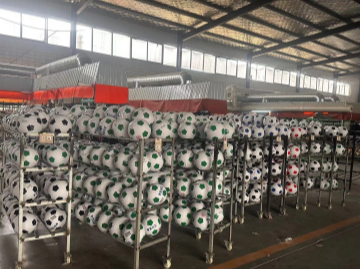
Whether you're looking to stock official-sized volleyballs for competitive play, durable training balls for aspiring athletes, or unique custom designs for your brand, Hebei Starry Sports Goods Co, Ltd is your trusted partner. Benefit from our extensive manufacturing experience, stringent quality control, and strategic global logistics.
Call Us: +86 15713370191 / +86 15369832815 / +86 15720387999
WELCOME TO INQUIRE


LATEST NEWS
Crafted with precision and care, our soccer ball features a durable rubber core that ensures excellent bounce and resilience. The rubber material is not only lightweight but also provides the ideal amount of grip, allowing players to control the ball with ease. This means you can focus on perfecting your shots, passes, and tricks without worrying about the ball slipping away from you.
26,04 , 2026
Custom Mini Basketball Ball for Branding and Promotional Use
In today’s competitive marketplace, brands are constantly searching for creative, cost-effective way
READ MORE
24,04 , 2026
Size Guide for Basketballs Wholesale: From Youth to Professional
Choosing the right basketball size is one of the most important decisions for wholesalers, sports eq
READ MORE
23,04 , 2026
Outdoor vs Indoor Basketballs Wholesale: Key Differences
When sourcing basketballs in bulk, understanding the difference between outdoor and indoor models is
READ MORE